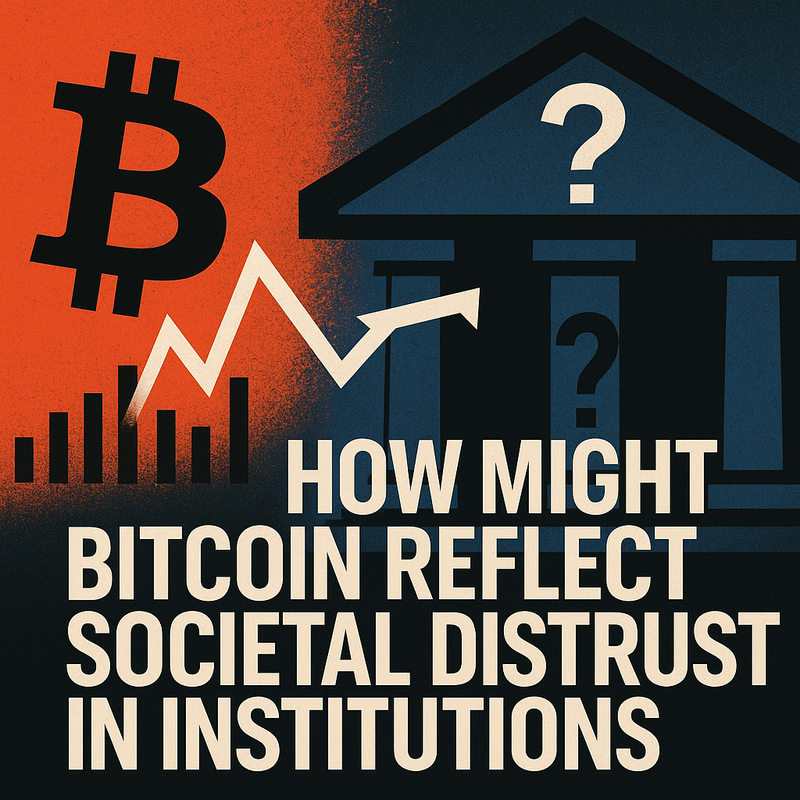
How might Bitcoin reflect societal distrust in institutions
Bitcoin's Silent Rebellion: How Crypto Exposes Our Deep Institutional Distrust
The uncomfortable truth about why millions are fleeing traditional systems for decentralized alternatives
The Unspoken Truth About Your Portfolio
Have you ever wondered why Bitcoin continues to defy expectations, surviving countless "deaths" and regulatory attacks? Why does it attract such passionate support despite its volatility?
Reality Check: Bitcoin isn't just a digital currency—it's a protest vote against a broken financial system. While institutions want you to believe they have your best interests at heart, the data tells a different story.
The 2008 financial crisis didn't just collapse markets—it shattered trust. While banks got bailouts, ordinary people lost homes, savings, and faith in the system. Bitcoin emerged from this wreckage as an alternative that doesn't require trusting fallible institutions.
By The Numbers: The Distrust Economy
Research reveals a statistically significant correlation between political distrust and cryptocurrency adoption. This isn't coincidence—it's causation. When people lose faith in their leaders and financial systems, they seek alternatives that can't be manipulated behind closed doors.
The Institutional Paradox
Here's where it gets interesting: while Bitcoin was created as an anti-institutional tool, those same institutions are now accumulating it at record rates. Corporations, hedge funds, and even governments are buying Bitcoin while simultaneously trying to regulate it into conformity.
Smart money insight: Institutions want Bitcoin's returns without its revolutionary DNA. They're trying to tame what they can't control—creating both opportunity and risk for individual investors.
Five Ways Bitcoin Channels Societal Distrust
- Decentralized Architecture: No central authority can freeze accounts, reverse transactions, or print more Bitcoin. The code is law, not politicians or bankers.
- Censorship Resistance: Unlike traditional payment systems, Bitcoin transactions can't be blocked based on political views or social status.
- Transparent Monetary Policy: Everyone knows exactly how many Bitcoin will ever exist (21 million). Compare this to central banks that can print money secretly.
- Global Accessibility: Bitcoin doesn't care about your nationality, credit score, or bank account status. If you have internet access, you have financial access.
- Self-Custody Option: You can actually hold your wealth without depending on third parties—something impossible with traditional finance.
The Coming Institutional Showdown
As more institutions adopt Bitcoin, a fundamental tension emerges: will Bitcoin become just another asset class controlled by the same powerful entities, or will it maintain its decentralized, trustless nature?
This battle will create massive volatility—and enormous opportunities for those who can navigate these waters effectively.
Why This Matters For Your Portfolio Right Now
Understanding Bitcoin's role as a distrust barometer isn't academic—it's crucial for making informed investment decisions. When institutional trust declines, Bitcoin typically gains value as a hedge.
But here's the problem: most traders miss these signals because they're focused on short-term price movements rather than underlying societal shifts.
Critical insight: Bitcoin isn't reacting to market news—it's reacting to trust dynamics. Traditional analysis methods fail because they don't account for this psychological dimension.
This creates both danger and opportunity. Danger for those following conventional wisdom. Opportunity for those who understand what's really moving markets.
Stop Gambling. Start Trading With Confidence.
While you can't control institutional distrust, you can control how you respond to market movements. Our algorithm-powered buy/sell alerts help you navigate volatility without emotional decisions.
Get Precision Alerts Now →
Join 15,000+ traders who trust data over hype. Past performance ≠ future results. We provide alerts, not financial advice.